Not sure what to cook with whatever is at the market? Seasonal vegetable recipes start with what is ripe in Georgia: simple roasts, quick skillets and cold salads built on one or two ingredients.
Cooking by the calendar is one small part of how local food systems connect growers and home cooks in the same region.
| Item | Georgia season or timing |
|---|---|
| Strawberries | April-June |
| Tomatoes | June-July |
| Carrots | January-May |
| Sweet potatoes | August-November |
| Spring plantings harvested | June and July |
| Fall plantings harvested | October to December |
These windows come from the UGA and Fort Valley State produce handout and the UGA vegetable garden calendar. Figures can change with weather and region, so check the sources before you rely on them.
How do you cook seasonal vegetables through the year?
Cooking with the seasons means building a meal around what is ripe nearest to you. The UGA vegetable garden calendar, which shows a full review on March 10, 2026, says the two major planting periods are spring (March to May) and fall (mid-July to September). Spring plantings are harvested in June and July, while fall plantings come in from October to December.
Your exact dates depend on where you live. The same calendar notes that spring planting dates run earlier in extreme south Georgia and later as you move north into the mountain counties. A UGA Extension produce guide from December 24, 2025 adds that Georgia spans eight USDA hardiness zones, so growers in different regions will not harvest in the same week.
A simple routine keeps seasonal cooking easy:
- Choose the vegetable that looks best at the stall, not the one a recipe demanded.
- Keep the seasoning light so the vegetable stays the main flavor.
- Cook it one way well, whether that is roasted, sautéed or served raw.
Spring recipes: cabbage, carrots and strawberries
In the handout revised in August 2014, strawberries run April-June and cabbage runs April-May and July-August. Carrots are listed for January-May and Vidalia onions for May-June. Those overlaps make cabbage and onions a natural pairing in May.
Skillet cabbage with Vidalia onions
- Slice the onion thinly and shred the cabbage.
- Warm a little oil in a wide skillet and cook the onion until soft and golden.
- Add the cabbage and a pinch of salt, and stir until it wilts but still has some bite.
- Finish with black pepper and a splash of vinegar.
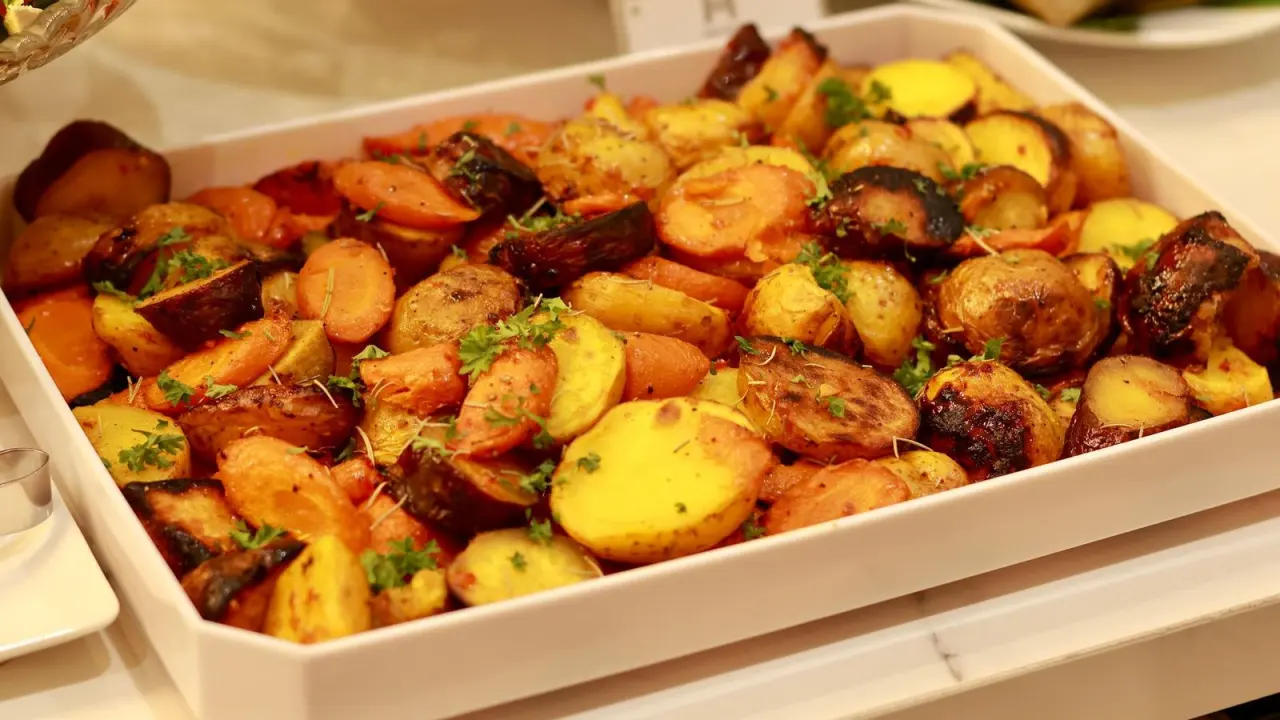
Roasted carrots with herbs
- Scrub the carrots and cut them in long halves so they cook evenly.
- Toss them with oil and salt, then roast on a tray until the edges brown.
- Scatter chopped fresh herbs over the top while they are still hot.
Strawberries need almost no recipe. Slice them over yogurt or toss them into a green salad with a little vinegar and pepper for a sweet-sharp contrast.
Summer recipes: tomatoes, squash and corn
The same UGA and Fort Valley State handout lists tomatoes for June-July, squash for June-July, and corn and cucumbers for June. Okra is also June, peppers are July, and beans stretch from June-September. In peak summer, raw and quick-cooked dishes save you from heating the kitchen.
Tomato and cucumber salad
- Cut ripe tomatoes into chunky wedges and slice the cucumbers.
- Add thin slices of onion, a drizzle of oil and a splash of vinegar.
- Salt it and let it sit briefly so the juices mingle, then serve with crusty bread.
Squash and corn skillet
- Cut the kernels off the cobs and slice the squash into half-moons.
- Cook the squash in a hot skillet with oil until it browns at the edges.
- Stir in the corn and cook briefly, then season with salt, pepper and torn basil if you have it.
Peaches are listed for May-August in the handout, which means they overlap with all of these vegetables. If you end up with more than you can eat, the peach preserves recipe is a sibling guide for putting some away.
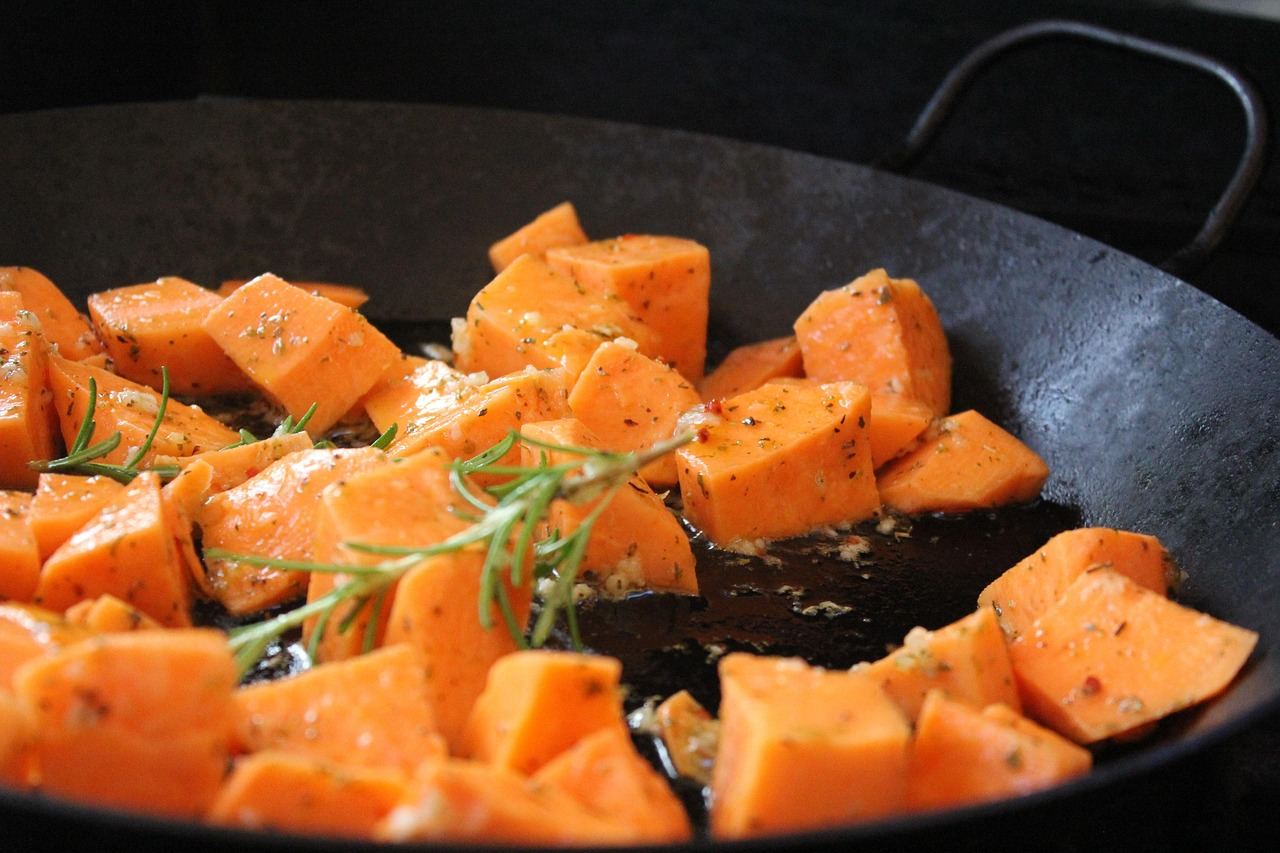
Fall and winter recipes: sweet potatoes, apples and greens
The handout lists sweet potatoes and apples for August-November, so they share a pan easily. It lists greens for January-February. UGA’s fall vegetable gardening circular, published on March 15, 2023, says cool-season vegetables include broccoli, cauliflower, Brussels sprouts, lettuce, carrots and assorted greens.
Roasted sweet potatoes and apples
- Cut the sweet potatoes and apples into similar-sized chunks.
- Toss with oil, salt and a pinch of cinnamon, then roast until the sweet potatoes are tender.
- Serve warm, and add a drizzle of honey at the end if you like it sweeter.
If you want to buy honey from a market stall, the guide on is local honey better explains what to weigh before you pick a jar.
Garlicky greens
- Wash the greens well and strip the tough stems.
- Cook sliced garlic in oil for a moment, then add the greens in handfuls.
- Stir until wilted and tender, and finish with a squeeze of lemon or a dash of vinegar.
Broccoli, cauliflower and Brussels sprouts all take well to the same roasting method as the carrots above. Because fall plantings are harvested from October to December, these cool-season vegetables show up just as the weather turns.
How to plan your shopping around the seasons
Seasonal charts are a starting point, not a rulebook. UGA’s month-by-month produce guide uses a legend of A for available and L for limited availability, which is a reminder that some crops are only around for a short stretch.
- Ask the grower what is at its peak this week, then plan the meal around the answer.
- Buy a little extra of one vegetable and cook it two different ways.
- Keep the seasoning plain so you can taste what changed from last month.
- Check the date on any seasonal chart, since older handouts may not match this year’s weather.
Frequently asked questions
What counts as local produce?
Show answer
There is no single definition. The USDA’s Agricultural Marketing Service often uses “the distance between product origin and point of sale is at most 400 miles, or both the final market and the product origin are within the same State, US territory, or Tribal land,” according to the UGA Extension produce guide.
Which vegetables are in season in Georgia in summer?
Show answer
The handout revised in August 2014 lists tomatoes and squash for June-July, corn, cucumbers and okra for June, and peppers for July. Beans run from June-September.
Can I cook seasonally in winter?
Show answer
Yes. The same handout lists carrots for January-May and greens for January-February. Fall plantings are also harvested from October to December, according to the UGA vegetable garden calendar.
Do these dates apply across all of Georgia?
Show answer
Not exactly. The garden calendar describes middle Georgia as its reference belt, and spring planting dates can be as much as 2 to 3 weeks earlier in extreme south Georgia. Ask your market growers what is ready in your area.