Wondering what “local” really means on a food label? Local food systems connect nearby growers to eaters through short supply chains, but no agreed definition exists. Here is how they work and how to use them.
| Item | Value |
|---|---|
| Federal distance limit for “local” (2008 farm bill) | Less than 400 miles from origin, or within the state where produced |
| U.S. local food sales at farm level (2012) | $6.1 billion |
| Farms selling through local food systems (2012) | Nearly 164,000 farms (about 8% of U.S. farms) |
| Share of U.S. agricultural production value (2012) | 1.5% |
| Local food farms with under $75,000 in annual gross income | 85% of all local food farms |
| Shoppers citing freshness as a reason to buy local (2009 study) | 82 percent |
The sales and farm figures come from a Congressional Research Service summary dated February 2016, and the shopper survey from a December 2010 USDA Economic Research Service article. Figures like these can change, so check the source before you rely on them.
What are local food systems?
A local food system covers the growing, selling and buying of food within a limited area, or through close ties between grower and eater. The Congressional Research Service describes local and regional food systems as production and marketing within a certain geographic proximity, or involving social or supply chain traits such as small family farms, urban gardens or sustainable practices (CRS, February 2016). In plain terms, there are fewer steps between the field and your plate.
The idea sounds simple, but USDA’s Economic Research Service found there is no consensus on a definition of “local” or “local food systems” in terms of the distance between production and consumption (ERS report ERR-97, May 2010). What is well recognized is defining local by marketing arrangement, such as farmers selling directly to consumers at regional farmers’ markets or to schools.
A 2018 glossary in Choices magazine argues that one thread runs through every definition: a short supply chain with few or no intermediaries and some sense of proximity between the producer and the end consumer. It also notes that, unlike certified organic, USDA has not arrived at a uniform set of standards for local foods.
A short history of eating close to home
In the early 1900s, nearly 40 percent of Americans lived on farms, and most food was locally grown and marketed, according to USDA’s Amber Waves feature of December 2010. Food processing meant canning, dehydrating, salting or smoking, and what people ate followed the local seasons.
After World War II, lower transportation costs and better refrigeration let perishable items such as meats and produce be shipped across the globe affordably. In the late 1960s, a desire to eat locally lined up with a budding environmental movement, and the same article says a more recent renewal of that aspiration has gained momentum.
How far is local? Miles, borders and markets
Because no single rule exists, “local” changes depending on who is speaking. The examples below are all drawn from published sources, and they show how wide the range is.
- Federal programs: the 2008 farm bill defined a locally or regionally produced food as one transported less than 400 miles from its origin, or produced within the state where it is marketed. As of the CRS’s February 2016 summary, this was the most widely used definition for federal support programs (CRS).
- Vermont: as of the 2010 Amber Waves article, state law required “local” items to originate within 30 miles of the point of sale.
- Locavores: the New Oxford American Dictionary chose “locavore” as its 2007 word of the year, defining it as a person who tries to eat only food grown or produced within a 100-mile radius.
- Retailers: that same article reports that Wal-Mart defined local food as produced within a state’s borders, while Whole Foods required products to travel less than a day, or 7 or fewer hours by car or truck, from farm to store.
- Farmers’ markets: in 2009, four central Virginia markets used a 100-mile radius within Virginia, two used a 75-mile radius, and one required food to be grown within the county.
Geography matters too. A person used to driving long distances for goods may count a day’s drive as local, while a big-city resident is unlikely to, because what counts as local in a sparsely populated area can differ from a dense one (ERS, December 2010).
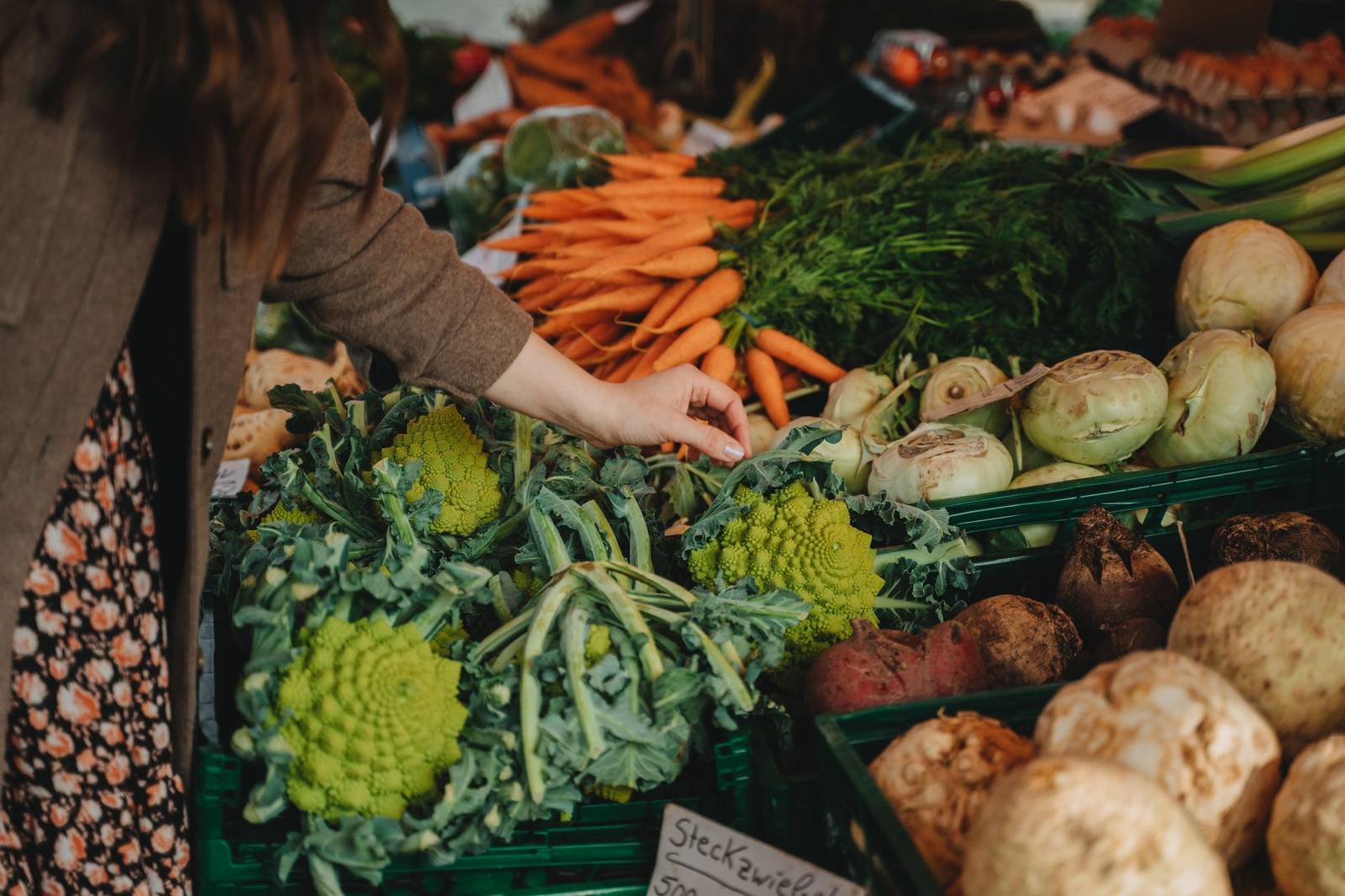
The practical lesson is to treat “local” as a claim to check, not a guarantee. Ask the seller where the food was grown, how far it travelled, and what definition the market uses. Farmers’ markets that publish their own growing radius make that easy.
How local food moves from farm to you
Local food reaches households through many routes, and not all involve a market stall. The CRS lists direct-to-consumer marketing, farmers’ markets, farm-to-school programs, community-supported agriculture, community gardens, school gardens and food hubs among the businesses engaged in local foods (CRS, February 2016).
The same summary names other formats worth knowing:
- On-farm sales and stores
- Internet marketing
- Food cooperatives and buying clubs
- Roadside stands
- Urban farms and community kitchens
Direct sales: stands, markets and shares
With a CSA, local residents buy shares in a farmer’s expected harvest before planting, then receive weekly deliveries or pick up from the farm throughout the growing season, as described by USDA’s Economic Research Service. If you want the details of how a share works, this explainer on what is a csa covers it step by step.
Restaurants and institutions can be part of the chain as well. The phrase on a menu is a separate topic, and the farm to table meaning guide explains how that wording is used and what it does and does not tell you.
Why relationships hold the chain together
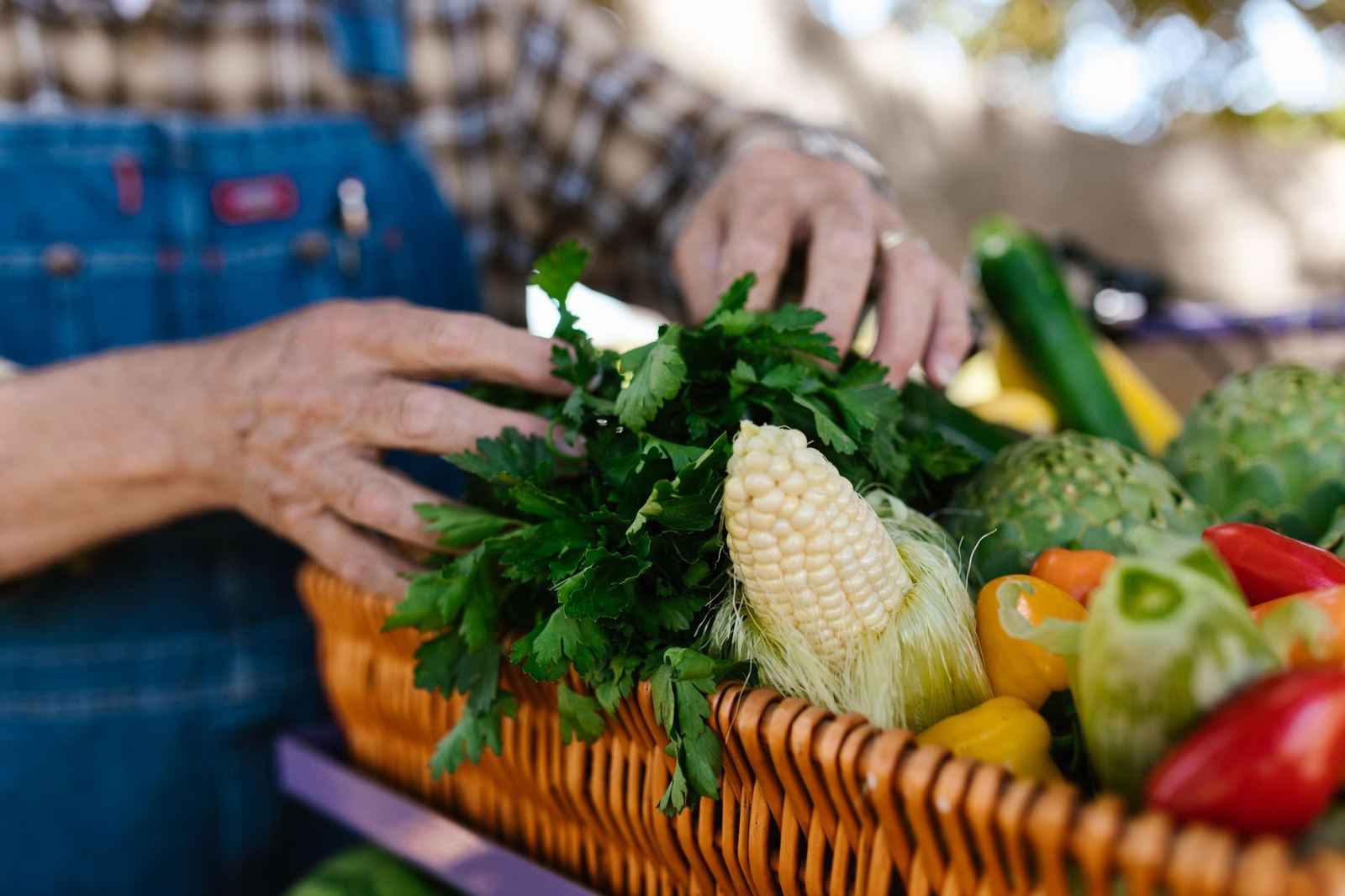
The Choices glossary calls relationship marketing, a focus on longer-term customer satisfaction and repeat buyers rather than one-off sales, a basic tenet underpinning local food systems. It cites USDA’s “Know Your Farmer, Know Your Food” campaign as an example of the philosophy.
The glossary also stresses transparency: for local food consumers, the ability to see and understand the links in a short supply chain builds trust. That is why a quick conversation with the person who grew your food is worth more than a vague sign.
What the numbers and research say
Local food is a small but growing part of U.S. agriculture. The CRS reports that USDA estimated the farm-level value of local food sales at about $4.8 billion for 2008, with 107,000 farms involved, about 5% of all U.S. farms (CRS, February 2016).
For 2012, USDA’s estimate rose to $6.1 billion from nearly 164,000 farmers, about 8% of U.S. farms. That was an estimated 1.5% of the value of total U.S. agricultural production, and the CRS notes that broader estimates range from $4 billion to $12 billion a year.
Small farms lead the way
Smaller farms depend more on direct sales. ERS found that for smaller farms, direct marketing to consumers accounts for a higher percentage of sales than for larger farms (ERS report). The Congressional Research Service adds that farms making less than $75,000 in annual gross income made up 85% of all local food farms, according to its February 2016 summary.
A caution about the data: census figures on direct sales to consumers are not equivalent to the value of local direct-to-consumer marketing, because catalog and Internet sales are included even though those buyers are typically not local (ERS, December 2010). The USDA’s National Agricultural Library points to the 2020 Local Food Marketing Practices Survey as a source of benchmark data on these practices.
Public support
Local food programs get federal money, though the totals depend on what is counted. The CRS says USDA allocated more than $80 million in program-level funding for local foods in FY2015, including $26.6 million for two grant programs, the Farmers Market Promotion Program and the Local Food Marketing Promotion Program (CRS).
Why shoppers choose local
In a 2009 national study by the Food Marketing Institute, consumers cited freshness (82 percent), support for the local economy (75 percent) and knowing the source of the product (58 percent) as reasons to buy local food. Surveys also suggest some shoppers will pay a premium for in-state products, from 9 percent for items such as maple syrup or Colorado potatoes to 50 percent for fresh Florida-grown produce (ERS, December 2010).
Perceptions are one thing, and proof is another. ERS summarized that findings are mixed on local food’s effect on local economic development and on nutrition, and that the sparse literature was so far inconclusive about whether localization reduces energy use or greenhouse gas emissions (ERS, 2010).
Product-level claims deserve the same scrutiny, and the guide that asks is local honey better applies that thinking to one popular example.
Bringing local food into your kitchen
Knowing how the system works is useful only if it changes what lands on your table. Start with a market or farm stand near you, and a companion guide on fresh produce at farmers markets covers what to look for at the stall. If you shop in the Peach State, the overview of farmers markets in georgia is a good place to begin.
USDA’s National Agricultural Library also links to USDA local food directories covering agritourism, CSAs, farms, farmers markets and food hubs, which can help you find sellers in your area.
Plan around what is in season
Seasonal food is cheap in effort when you plan for it. A routine for farmers market meal prep turns a bag of market produce into several meals, and a set of seasonal vegetable recipes keeps the rotation interesting as the harvest changes.
Preserve the peak
Early local food relied on canning, dehydrating, salting and smoking, and preserving is still a good way to stretch a short season. A peach preserves recipe carries on that tradition, while the steps in how to freeze peaches offer a quicker modern route.
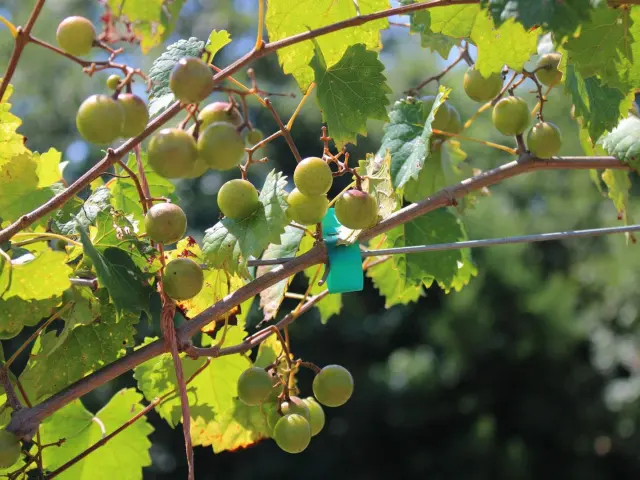
Value-added products are part of local food too. The Choices glossary lists processing grapes into wine as one example of value-added agriculture, and the guide to muscadine wine georgia follows a product from that category.
Frequently asked questions
Is there an official definition of local food?
Show answer
Not a single one. Federal programs most often use the 2008 farm bill wording of less than 400 miles or within the state, as of the CRS’s February 2016 summary, while states, retailers and markets set their own rules.
Does buying local reduce greenhouse gas emissions?
Show answer
The evidence is not settled. ERS’s 2010 report described the sparse literature as inconclusive on whether localization reduces energy use or greenhouse gas emissions.
How big is the local food market?
Show answer
It is small but growing. USDA estimated 2012 local food sales at $6.1 billion, about 1.5% of the value of U.S. agricultural production, according to the CRS.
Do all local farms sell at farmers’ markets?
Show answer
No. Local food also moves through CSAs, farm stands, food hubs, farm-to-school programs, cooperatives and more, as the National Agricultural Library notes when it describes farmers markets, CSAs, food hubs, grocery stores and other channels.
How can I check that food is really local?
Show answer
Ask the seller where it was grown and how far it travelled. Compare the answer with the market’s own radius, and remember that the Choices glossary links trust in local food to being able to see the links in a short supply chain.