Worried your market peaches will turn brown or mushy in the freezer? Here is how to freeze peaches: peel, keep them in an ascorbic acid solution, pack with sugar or syrup, leave headspace, then seal, label and freeze.
Freezing a flat of fruit is one small way to carry a market harvest through the year, and it fits into the wider picture of local food systems.
| Item | Value |
|---|---|
| Boiling-water dip to loosen skins | 30 to 60 seconds |
| Browning guard | 1 teaspoon (3,000 mg) ascorbic acid to 1 gallon of cold water |
| Sugar pack | 2/3 cup sugar per quart (1 1/3 pounds) of prepared fruit |
| Syrup pack | 40 percent syrup |
| Headspace | 1/2 inch for pints, 1 inch for quarts |
| Ripening firm peaches in a paper bag | 2 to 3 days at room temperature |
These figures come from Utah State University Extension and Clemson’s Home & Garden Information Center. Guidance can change, so check the sources before you rely on them.
Choose peaches that are ready to freeze
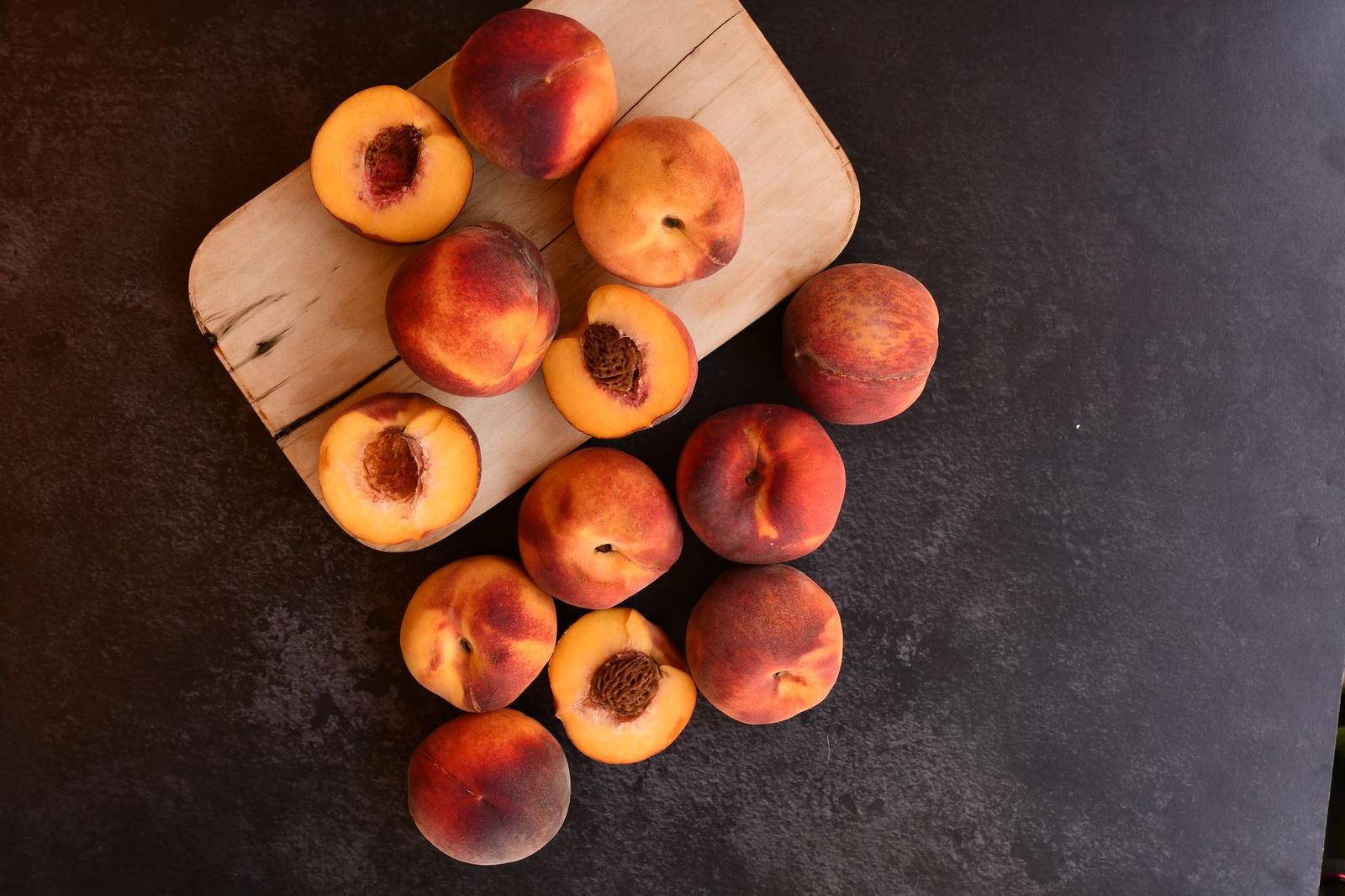
The background color, not the red blush, tells you the most. Utah State University Extension says the background should be yellow or cream rather than green, and the blush will not tell you whether a peach is ripe or how it will taste.
Clemson’s guidance adds that peaches should be firm or give slightly, with a strong, sweet smell and a yellowish-golden background. Here is a quick checklist to carry to the stand:
- A yellow or cream background color rather than green.
- A fresh peachy odor.
- Skin free from blemishes.
- Fruit that is well ripened but handled carefully to avoid bruising.
If your peaches are still firm, ripen them in a loosely closed brown paper bag at room temperature for 2 to 3 days. Once they are ripe, use them or store them in the refrigerator until you are ready to freeze.
How do you peel peaches and stop them browning?
Peeling is quick once you blanch the fruit. Work in small batches so the peaches do not sit out and darken.
- Sort and wash the peaches.
- Dip them in boiling water for 30 to 60 seconds, until the skins loosen.
- Dip them quickly in cold water and slip off the skins.
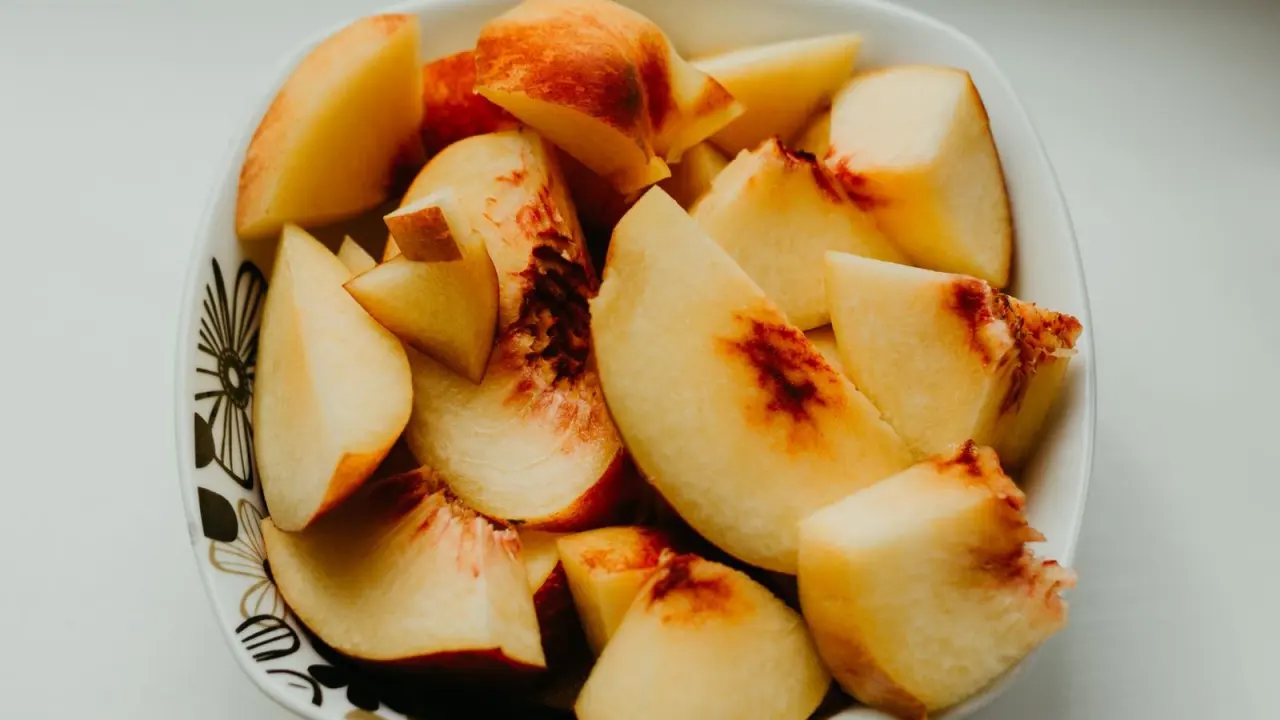
- Cut the peaches in half, remove the pits, and slice if you like.
- Keep the peeled fruit in an ascorbic acid solution until you are ready to pack it.
The ascorbic acid solution is 1 teaspoon (3,000 mg) ascorbic acid to 1 gallon of cold water. It comes in a few forms, and both extension sources describe the same strength:
- Pure powder, where one level teaspoon weighs about 3,000 milligrams.
- Vitamin C tablets: buy 500-milligram tablets, then crush and dissolve six per gallon of water.
- Commercial fruit-browning mixtures, used according to the package directions.
Citric acid powder is sometimes sold in supermarkets, but Utah State University Extension says it is not effective in controlling discoloration.
Sugar pack, syrup pack or purée
Utah State University Extension describes three ways to pack peaches for the freezer. Pick the one that suits how you plan to eat them.
Sugar pack
For a sugar pack, add 2/3 cup sugar to each quart (1 1/3 pounds) of prepared fruit and mix well. Stir gently until the sugar dissolves, or let the fruit stand for 15 minutes.
To slow darkening, sprinkle ascorbic acid dissolved in water over the peaches before you add the sugar. Use 1/4 teaspoon (750 mg) ascorbic acid in 3 tablespoons cold water for each quart of fruit.
Syrup pack
A syrup pack uses 40 percent syrup. For better quality, add 1/2 teaspoon (1,500 mg) ascorbic acid per quart of syrup.
Put the peaches directly into cold syrup in the container, starting with 1/2 cup of syrup for a pint container. Press the fruit down and add syrup to cover. A small piece of crumpled freezer paper or waxed paper on top helps hold the fruit under the syrup.
Crushed or purée
For purée, coarsely crush peeled and pitted peaches, then press them through a sieve or blend them in a blender or food processor. Heating the pitted peaches for 4 minutes in just enough water to prevent scorching makes them easier to purée.
For better quality, add 1/8 teaspoon (375 mg) ascorbic acid to each quart of fruit. This method lists no added sugar.
Headspace, sealing and labeling
Frozen fruit expands, so leave headspace at the top of every container. Utah State University Extension gives 1/2 inch for pints and 1 inch for quarts.
Finish each batch the same way: seal, label and freeze. A label with the pack type and the date helps you use the oldest containers first.
Planning how much to buy at the market
A sugar-packed quart starts from 1 1/3 pounds of prepared fruit, so a quart of frozen peaches takes a little more than a pound of peeled, pitted fruit. Plan your purchase around the number of containers you want to fill.
If your peaches arrive in a weekly farm box, the explainer on what is a csa shows how those shares work and why a heavy peach week can happen.
Freezer space is not the only option. Clemson’s guide also covers canning, jam and salsa, listing canning, freezing, salsa and preserves as ways to keep peaches past the harvest season.
When the peaches are packed away, you can turn to another Georgia fruit in the piece on muscadine wine georgia.
Frequently asked questions
Do I have to add sugar when freezing peaches?
Show answer
Not for every method. The purée method on the Utah State University Extension page lists only ascorbic acid, while the sugar pack and syrup pack both add sweetener.
Can I use less sugar?
Show answer
Yes. The same page recommends trying lighter syrups, and it says light corn syrups or mild-flavored honey may replace up to half the granulated sugar called for in syrups.
What keeps frozen peaches from turning brown?
Show answer
Ascorbic acid does that work. Use the solution while you prepare the fruit, then add ascorbic acid to the sugar, syrup or purée as directed.
Can I freeze peaches that are still firm?
Show answer
Ripen them first. Place firm peaches in a loosely closed brown paper bag at room temperature for 2 to 3 days, as Utah State University Extension advises.