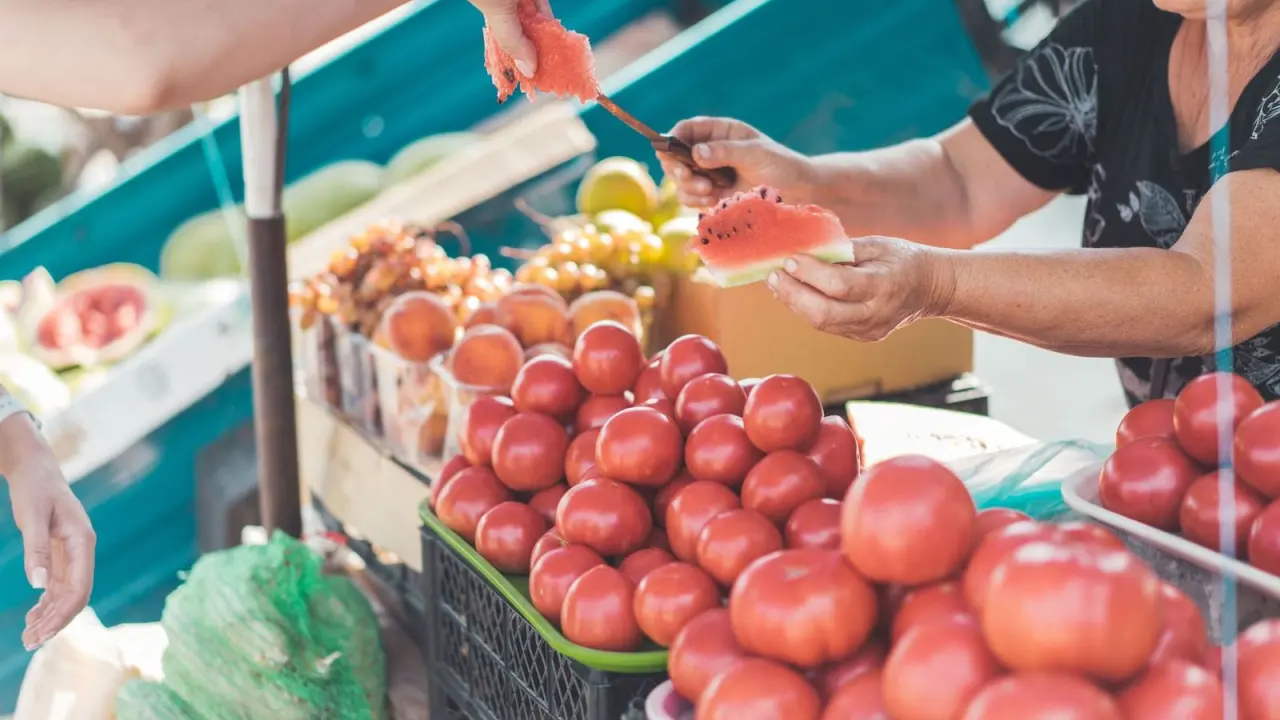
Wondering what to buy and when? Fresh produce at farmers markets tastes best in season, and in Georgia that means strawberries in spring, peaches in summer, sweet potatoes in fall and greens in winter.
| Item | Value |
|---|---|
| Georgia peach season | May-August |
| Vidalia onion season | May-June |
| Strawberry season | April-June |
| Sweet potato season | August-November |
| Vidalia growing region | 20 counties |
The season windows come from the UGA produce-in-season handout, revised in August 2014, and the region size from Atlanta News First’s July 2026 report. Figures can change from year to year, so check the source before you rely on them.
What makes market produce different
Market produce is shaped by the calendar and by distance. UGA Extension notes that Georgia farmers can grow a wide range of crops across eight USDA hardiness zones, and that a vast range of produce reaches shoppers through farmers markets, local distributors and retailers, or direct from the farm.
What counts as local is not fixed. The same UGA Extension page says even the USDA recognizes no singular definition, though its marketing service often uses a limit of at most 400 miles between origin and point of sale, or a market and origin within the same state, territory or tribal land.
That page also lists enhanced quality, taste and freshness as a major benefit of sourcing locally. It names inconsistencies in size, appearance and shape among the challenges buyers face, so an uneven tomato is part of the trade-off. It adds that research shows consumers are willing to pay a premium for local food, which is a good reason to compare prices stall by stall.
A Fort Valley grower quoted in Produce Business in 2024 said that reaching market quickly lets growers pick peaches more tree-ripened. The same report is a reminder of the scale behind the stalls: Atlanta News First reported in July 2026 that UGA’s Center for Agribusiness and Economic Development puts the economic impact of Georgia agriculture and agribusiness at about $91.4 billion annually.
Use the guide to farmers markets in georgia to find a market near you. For the bigger picture of how food moves from farm to buyer, read about local food systems.
What is in season in Georgia, month by month
The UGA Family and Consumer Sciences handout, revised in August 2014, gives typical Georgia windows for common crops. Treat the months below as a starting point rather than a promise.
| Crop | Typical months |
|---|---|
| Carrots | January-May |
| Greens | January-February |
| Strawberries | April-June |
| Cabbage | April-May and July-August |
| Blueberries | June-July |
| Tomatoes | June-July |
| Watermelon | June-August |
| Apples | August-November |
| Pears | August-October |
| Sweet potatoes | August-November |
A pick-your-own harvest calendar lists wider dates for several crops:
- Vidalia onions: April 20 to June 10.
- Peaches: May 8 to August 25.
- Tomatoes: May 25 to October 15.
- Collards: October 1 to June 20.
- Pecans: September 1 to Dec. 15.
For a crop-by-crop chart, Georgia’s Month-by-Month Produce Guide from UGA Extension, dated December 24, 2025, marks each month as available (A) or limited availability (L). That second label is useful for crops that taper off at the edges of a season.
Putting the handout windows into a shopping order gives a season-by-season list:
- Winter: greens (January-February) and carrots (January-May).
- Spring: strawberries (April-June), cabbage (April-May) and Vidalia onions (May-June).
- Summer: peaches (May-August), blueberries (June-July), tomatoes (June-July), corn (June), okra (June), squash (June-July) and watermelon (June-August).
- Fall: apples (August-November), pears (August-October) and sweet potatoes (August-November).
The handout’s windows are narrower than the pick-your-own calendar’s, so read both as a range. The seasonal produce guide georgia page is a handy companion to keep open on your phone while you shop.
Georgia’s headline crops: peaches, Vidalia onions and tomatoes
Peaches
Peaches run May-August in the UGA handout and from May 8 to August 25 in the pick-your-own calendar. As of Produce Business’s May 2024 issue, Georgia ranked third in the U.S. for peaches.
Variety matters more than the month on the label. The same pick-your-own calendar lists central Georgia harvest dates by variety, and says they run 1 to 2 weeks later in north Georgia:
- Sunbrite (clingstone): May 15 to 25.
- Red Haven (freestone): June 19 to 29.
- O’Henry (freestone): July 22 to August 3.
- Flameprince (freestone): August 1 to 10.
For deeper timing, read when are georgia peaches in season. If the peaches you bring home are still firm, see how to ripen peaches at home.
Vidalia onions
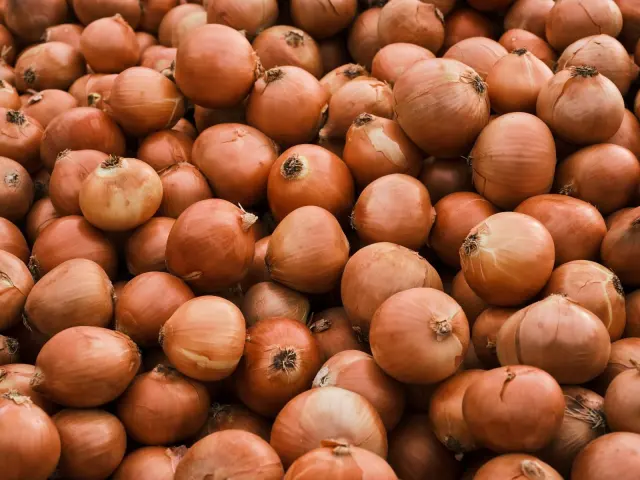
Vidalia onions are grown in a 20-county region of south Georgia, Atlanta News First reported in July 2026. Produce Business reported that the Vidalia Onion Act of 1986 established that area and trademarked the name.
Timing shifts with the weather. In that same report, the official 2024 pack date was April 17, harvest was expected to continue until May, and controlled atmosphere storage keeps the onions in top form until about early September.
The UGA handout lists May-June, while the pick-your-own calendar runs April 20 to June 10. To plan a purchase, read when is vidalia onion season.
Tomatoes
Tomatoes are listed as June-July by the UGA handout but as May 25 to October 15 by the pick-your-own calendar, so the two sources disagree on how wide the window is. Ask the grower what is coming in this week.
If you want to know the names behind the varieties on the table, the guide to heirloom tomato varieties is a good place to start.
Other crops where Georgia leads
Produce Business’s May 2024 issue, published online in June 2024, gave these rankings:
- First in the U.S.: peanuts and pecans.
- Second: cantaloupe and watermelon.
- Third: peaches and bell peppers.
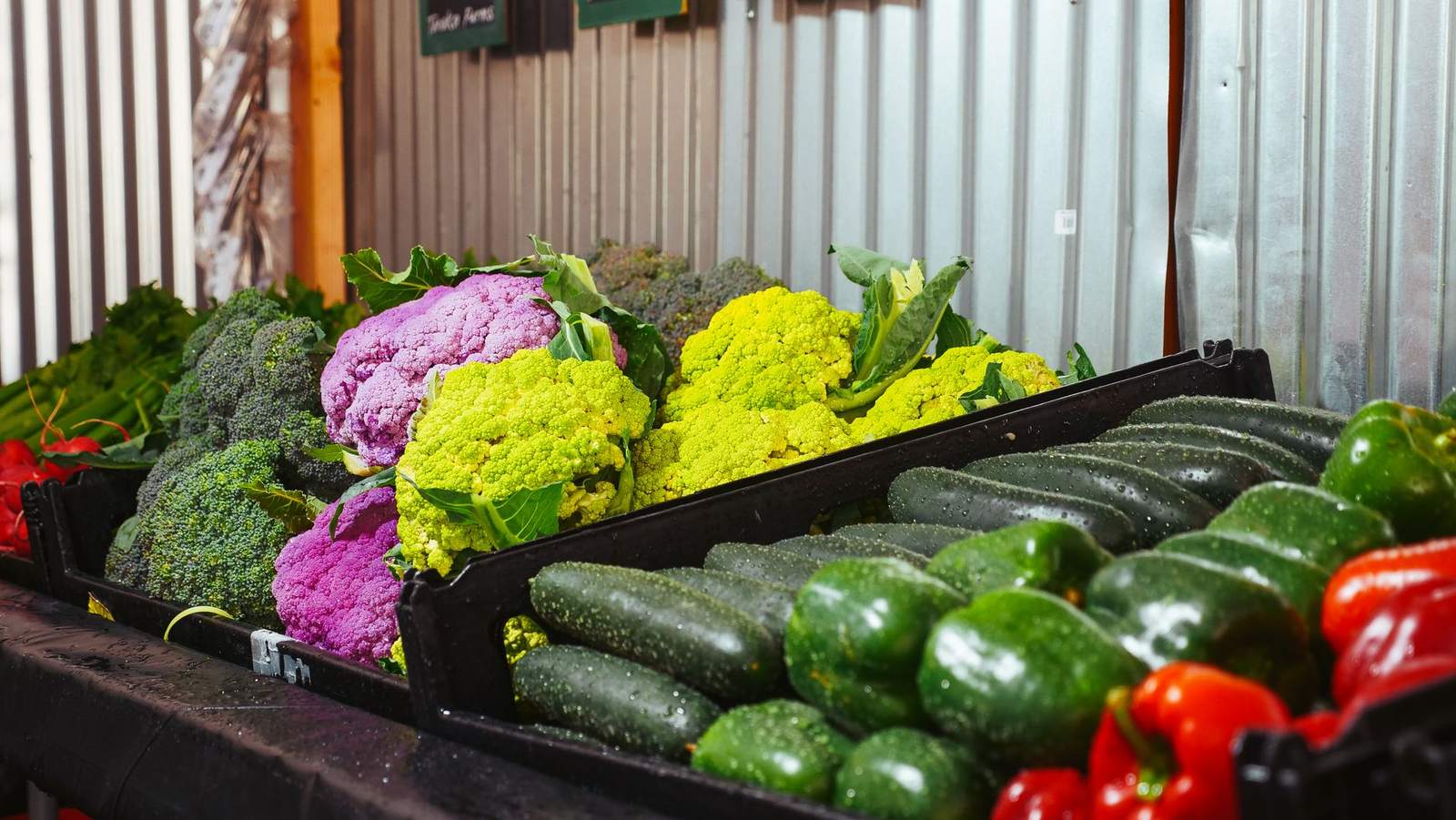
How to choose, store and wash what you buy
Good shopping starts with the season. Check the windows above, then follow these steps at the market:
- Walk the whole market once before you buy anything.
- Ask each grower what was picked most recently and which variety it is.
- Ask which items are ready to eat now and which need a few days.
- Buy for the week ahead rather than for the month.
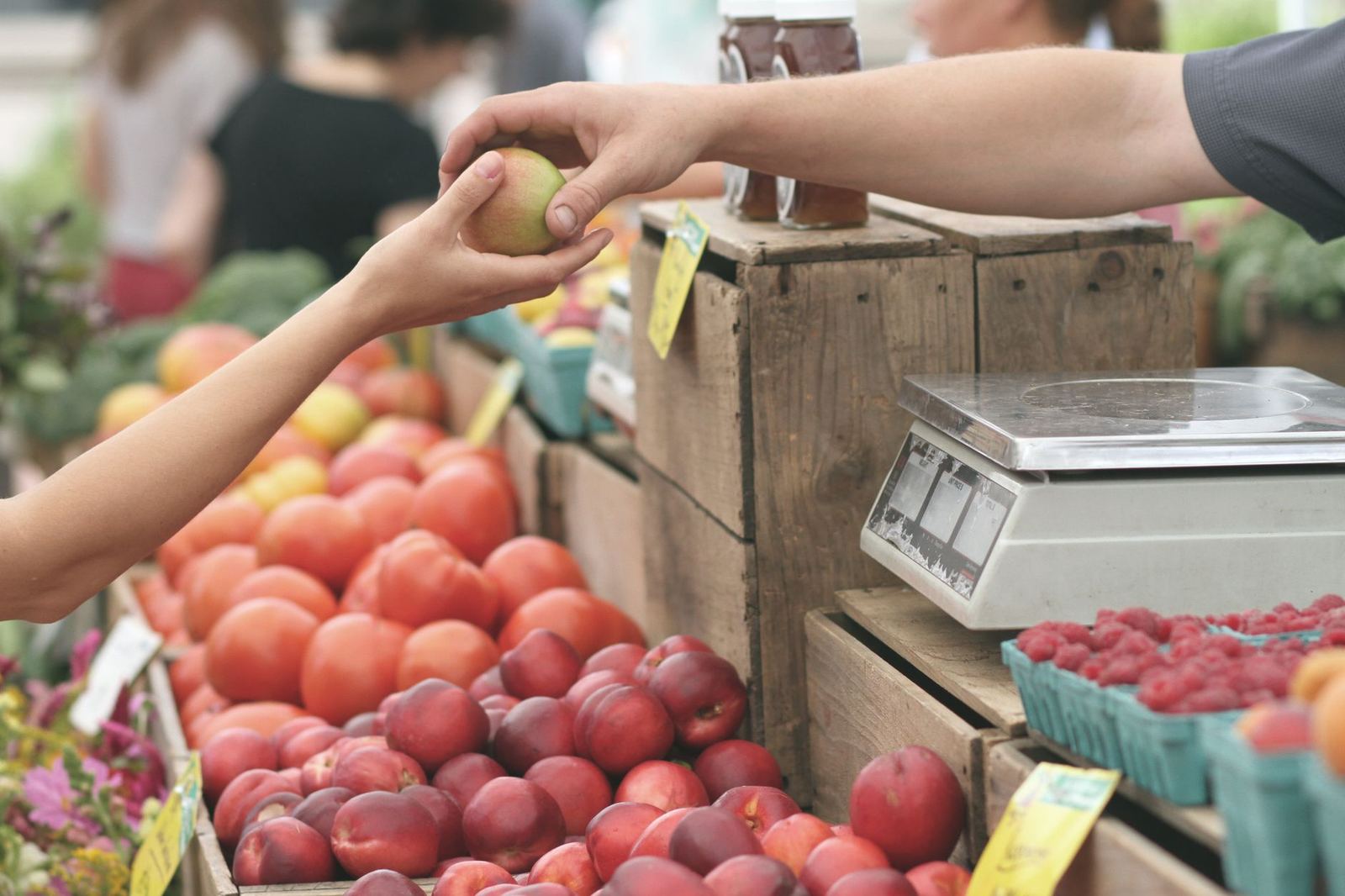
The guide on how to choose fresh produce at a farmers market covers what to look for at the stall. After you get home, read how to store fresh vegetables and how to wash farmers market produce.
Why do harvest dates differ from year to year?
The pick-your-own calendar describes its dates as typical and historical, and says they vary a little every year depending on the weather and other conditions. Georgia is a huge state with a wide range of climates, so the early dates generally refer to the start in the southern part of the state and the later dates to the end of the crop in the north.
Two examples from that calendar show the regional gap:
- Strawberries: March 1 to May 10 in southern Georgia, and April 5 to June 10 in the Atlanta area and north Georgia.
- Blueberries: June 1 to August 5 in southern Georgia, and June 15 to August 15 in the Atlanta area.
Weather can do more than shift a date. Produce Business reported that Georgia lost 90% of its peach crop in 2023 due to a late freeze in mid-March, which shows how much a single freeze can change a season.
Frequently asked questions
What fresh produce is in season in Georgia in summer?
Show answer
The UGA handout, revised in August 2014, lists peaches (May-August), blueberries (June-July), tomatoes (June-July) and watermelon (June-August). Confirm with the grower, since the handout is a typical guide and not a forecast.
When is Vidalia onion season?
Show answer
The sources give slightly different windows, running from late April into June, and the start moves with the weather each year. Ask a grower whether this year’s onions have arrived, and use the Vidalia onions section above for the dates and where each one comes from.
What does “local” mean at a farmers market?
Show answer
There is no single definition. UGA Extension says the USDA’s marketing service often uses at most 400 miles between origin and point of sale, or both within the same state, territory or tribal land.
Will every vendor have every crop listed as in season?
Show answer
No. The pick-your-own calendar says dates vary with weather and location, and UGA Extension lists limited availability and limited quantity among the challenges of local sourcing. Ask vendors what they expect to bring next week.