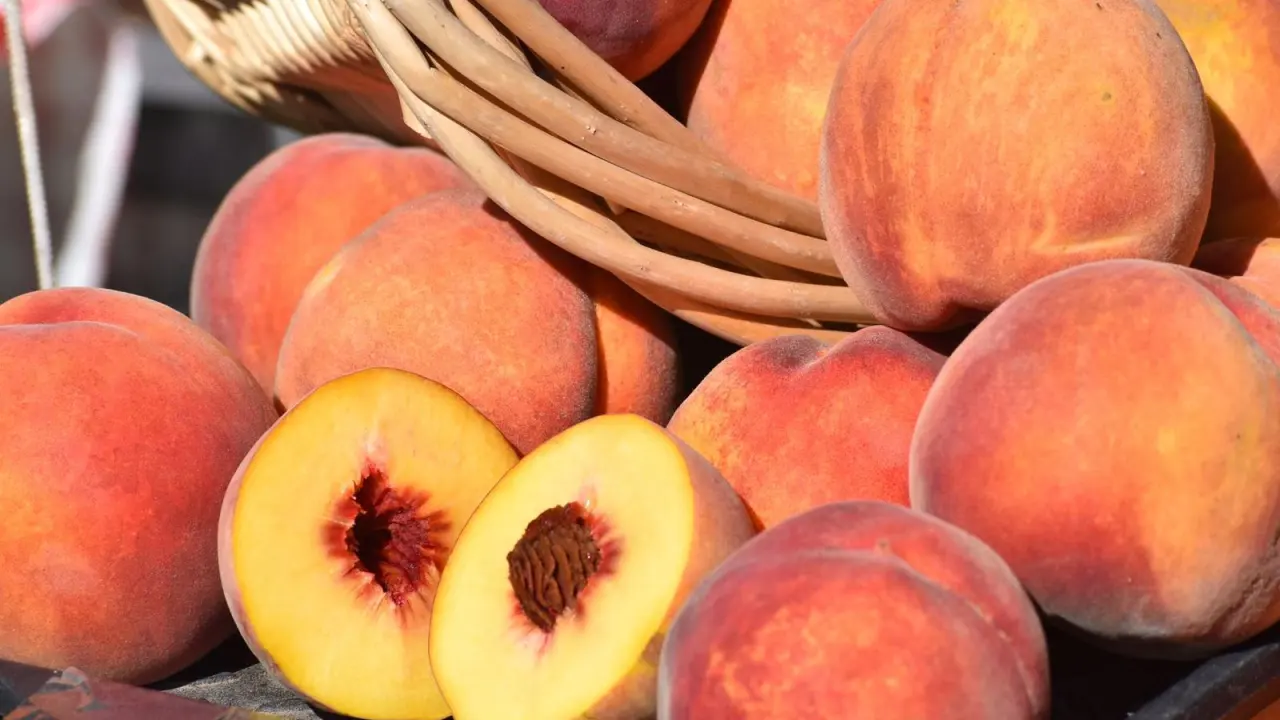
You want peaches at their best, not hard and mealy. So, when are Georgia peaches in season? Mostly from early May to mid-August, with different varieties ripening at different times.
This guide is part of our look at fresh produce at farmers markets, so you can plan a market trip around the fruit.
| Item | Value |
|---|---|
| Georgia peach production season | Early May to mid-August |
| Peach orchard area | 7,700 acres |
| Typical fruit yield | About 3.3 tons per acre |
| Farm gate value of Georgia peaches, 2023 | Over $20 million |
These figures come from the UGA harvest and postharvest handling bulletin and the UGA CAES peach page. They can change from year to year, so check the source before you rely on them.
Georgia peach season runs from early May to mid-August
The UGA bulletin on harvest and postharvest handling says the Georgia peach season spans from early May to mid-August. It counts 7,700 acres of orchards producing approximately 3.3 tons per acre, citing National Agricultural Statistics Service data from 2024, as described in the UGA Extension bulletin.
There is no single peak day, because varieties ripen at different times. A UGA Extension climate blog post dated May 20, 2022 said peaches were starting to be harvested and that the harvest should last for the next couple of months for that reason, according to the UGA climate blog.
The sources behind this guide do not give a variety-by-month calendar. Ask the grower at your market which variety you are holding and when the next variety is due.
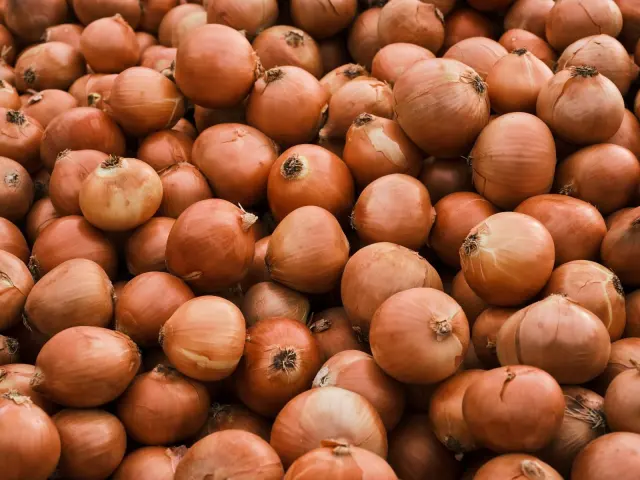
Peaches are not the only crop with a short window, and you can read when is vidalia onion season to plan around another Georgia favorite.
Why the season shifts from year to year
Weather moves both the start of the season and the volume of fruit. The May 2022 post noted that the crop was reduced somewhat by the freeze in March, and that this especially affected the earlier varieties, so early volumes were lower. It still said there would be plenty of peaches and that shoppers should not notice any shortages in the stores, as the UGA climate blog explains.
A UGA peach blog post from April 13, 2026 described a season that had been off to an unpredictable start, with some cold spells, as listed on the UGA CAES peach page.
What that means for you at the market:
- A spring cold snap can thin the supply of early varieties.
- Later varieties can still keep stalls stocked.
- Asking the grower beats assuming a fixed date.
Where Georgia peaches are grown
UGA’s peach page lists the top 10 counties for peaches, based on the Georgia Farm Gate Value Report for 2023. The counties named are:
- Bleckley
- Hall
- Peach
- Habersham
- Taylor
- Crawford
- Macon
- Monroe
- Brooks
- Meriwether
The same page says peaches had a 2023 Georgia farm gate value of over $20 million, and it credits Samuel H. Rumph as the “father of the Southern Peach Industry.” You can read more on the UGA CAES peach page.
Melting, freestone and clingstone peaches explained
Peach labels at a stand can be confusing, and the flesh type changes how a peach behaves. According to the UGA Extension bulletin:
- Melting-flesh peaches soften rapidly to a smooth, buttery texture and are most desirable for the fresh market.
- Melting peaches can be freestone or clingstone, which describes whether the flesh detaches from the stone (freestone) or stays attached (clingstone).
- Nonmelting-flesh peaches soften gradually to a rubbery texture and are the main type used for canning. They are always clingstone.
Melting-flesh varieties such as ‘O’Henry’, ‘Georgia Belle’ and ‘Redhaven’ can keep ripening after harvest if they were picked at a physiologically mature stage. Nonmelting types such as ‘Prince’ and ‘Tropic Beauty’ do not ripen significantly after harvest, per the same bulletin.
The bulletin also says truly tree-ripe peaches have the highest possible eating quality, but harvesting fully ripe fruit is not practical because of shipping requirements. Peaches headed to distant markets are often harvested earlier to survive the long trip, which is one reason a locally sold peach can taste different from a shipped one.
Choosing and handling peaches from a market stand
A few simple habits help you get the most from a market peach:
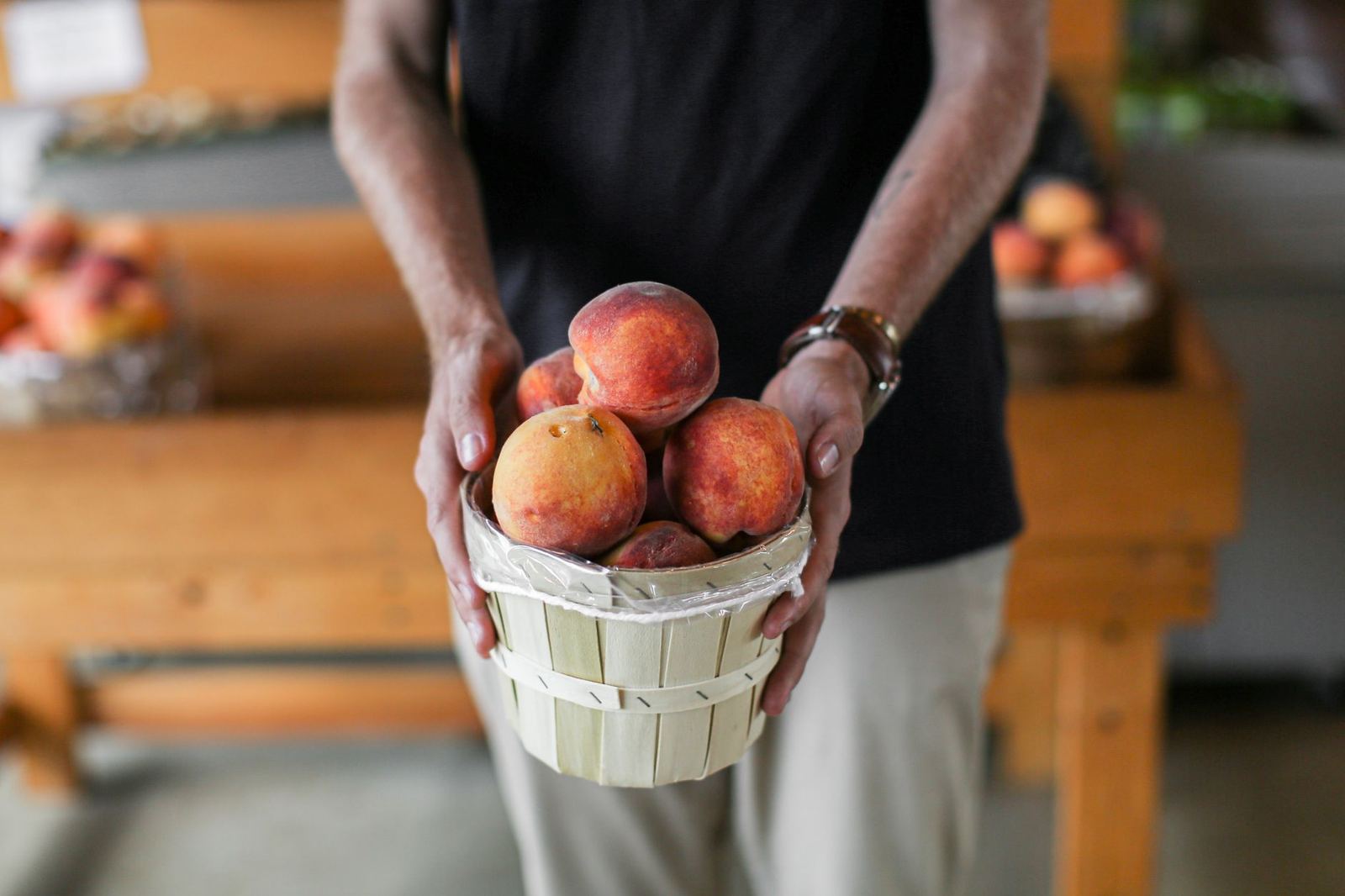
- Ask which variety it is and whether it is a melting or nonmelting type.
- Select well-ripened peaches and handle them carefully to avoid bruising.
- Wash peaches by gently rubbing them under cold running water, drain, and blot dry.
- If you are not using them immediately, refrigerate them at 40 degrees F or below.
Steps two to four follow the preservation guidance in the National Center for Home Food Preservation post dated June 21, 2020.
For crops that follow peaches through the year, the seasonal produce guide georgia is a handy next read.
Preserving peaches before the season ends
The National Center for Home Food Preservation, hosted by the University of Georgia, says preserving peaches by canning, freezing or drying is the best way to extend their use after harvest. Its post of June 21, 2020 describes freezing as easy, convenient and less time-consuming than canning.
For canning, the same post says traditional yellow peach varieties can be processed in a boiling water canner or a pressure canner, as halves or slices, and recommends hot packs for best quality.
White-flesh peaches are different. As of that June 21, 2020 post, canning white-flesh peaches is not recommended, because their natural pH can exceed 4.6, which makes them a low-acid food for canning purposes. The post says there was no low-acid pressure process for them and no researched acidification procedure, and it names freezing as the recommended method, as explained by the National Center for Home Food Preservation.
To peel peaches easily, the post says to dip them in boiling water for 30 to 60 seconds until the skins loosen, then dip them quickly in cold water and slip the skins off. Peeled and cut fruit can go in an ascorbic acid solution to prevent darkening, per the same post.
Frequently asked questions
When does Georgia peach season start?
Show answer
According to the UGA Extension bulletin, the Georgia peach production season starts in early May. A UGA climate blog post dated May 20, 2022 also said peaches were starting to be harvested.
When does Georgia peach season end?
Show answer
The same UGA bulletin puts the end of the production season at mid-August. Varieties ripen at different times, so ask your grower what is still coming in.
Will a hard peach ripen at home?
Show answer
It depends on the type. Melting-flesh peaches such as ‘O’Henry’, ‘Georgia Belle’ and ‘Redhaven’ can continue ripening after harvest if picked at a physiologically mature stage, while nonmelting types such as ‘Prince’ and ‘Tropic Beauty’ do not ripen significantly, per the UGA bulletin.
Can I can white-flesh peaches?
Show answer
As of the National Center for Home Food Preservation post of June 21, 2020, canning white-flesh peaches is not recommended and freezing is the recommended method. You can read the reasoning in the post itself.